 By
By 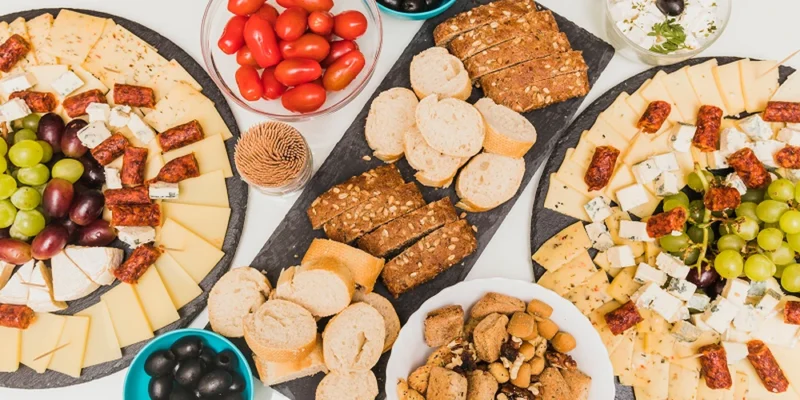
Finger food is commonly used at social gatherings because it can be eaten in small portions without the structure of a traditional seated meal. Depending on the food and serving format, guests may be able to eat while standing, moving around or talking to others.
Its role varies according to the type of gathering. A formal reception may use carefully portioned canapés, while a family celebration might rely on shared platters or party trays delivery to provide a selection of foods for several guests.
Understanding these differences can help explain why finger food appears across many types of social occasions.
What Is Finger Food and Why Is It Common at Social Gatherings?
Finger food generally refers to small portions designed to be eaten by hand, usually without a knife and fork. Examples can include sandwiches, skewers, pastries, sliced fruit, cheese, crackers and other bite-sized items.
This serving style is particularly suited to gatherings where guests are not expected to remain seated throughout the event. It can also allow food to be offered gradually rather than requiring everyone to eat at the same time.
Common practical characteristics of finger food include:
- Small or individually portioned servings
- Limited need for cutlery
- Easy access from shared platters or serving stations
- A mixture of foods that can accommodate different preferences
- Flexible serving arrangements for standing or seated guests
Some gatherings use assembled platters rather than individual appetisers. For example, cheese platter delivery may provide cheeses alongside items such as crackers, fruit or other accompaniments, depending on the specific platter.
Finger food therefore serves both a practical and social purpose. It provides refreshments while allowing the format of the gathering to remain relatively flexible.
What Is the Role of Finger Food at Formal Social Events?
Formal social events can include receptions, ceremonies, private functions and other occasions where food is served alongside conversation or scheduled activities. At these events, finger food is often provided as canapés, hors d’oeuvres or other small portions.
Presentation and serving methods tend to be more structured at formal functions. Food may be passed around by serving staff, placed at designated stations or arranged on platters for guests to select.
Finger food can serve several functions in this setting:
- Providing refreshments before a main meal
- Accompanying a drinks reception
- Allowing guests to eat while socialising
- Supporting events where a full seated meal is not part of the programme
The menu also needs to account for practical considerations such as portion size, ease of handling and potential mess. Foods that require extensive cutting or complicated utensils are generally less suited to standing receptions.
Shared arrangements such as cheese platter delivery can also form part of a reception where the event format permits self-service. In formal settings, finger food primarily provides a manageable way to combine refreshments with social interaction.
How Is Finger Food Used at Family and Community Gatherings?
Family and community gatherings can range from birthday celebrations and reunions to neighbourhood events and informal group meetings. These occasions often involve different age groups, schedules and food preferences.
Finger food can provide flexibility because guests can select smaller portions according to their needs. Shared platters can also make it easier to offer several types of food without serving separate plated meals.
Hosts or organisers may consider:
- Whether children and older guests can handle the food easily
- Dietary requirements and food allergies
- Clear labelling where ingredients may not be obvious
- Appropriate hot and cold food storage
- The expected number of guests
- Whether the gathering takes place indoors or outdoors
That said, for larger gatherings, party trays delivery may be one way of arranging multiple portions for communal serving. Regardless of how food is obtained, safe storage, handling and serving temperatures remain important.
In family and community settings, finger food mainly supports shared, flexible eating across groups with different needs.
What Role Does Finger Food Play at Networking and Corporate Social Events?
Networking events, conferences, workplace celebrations and corporate receptions often involve guests moving between conversations. Food that can be eaten in small portions may therefore be more practical than meals requiring a fixed seat and table setting.
Finger food can be positioned at serving stations or circulated during the event. The format allows refreshments to be available without necessarily interrupting networking activities.
For these gatherings, organisers typically need to consider portion size, serving time, dietary requirements and the availability of tables or disposal points. Foods should also be practical to handle in the specific event environment.
Finger food consequently supports the functional requirements of corporate social events by combining refreshments with a format that allows guests to continue moving and interacting.
Reach out to Cheeselads and make sharing food part of the gathering.







Comments